San Diego Whale Watching Season, Month by Month
San Diego whale watching season: gray whales mid-December to March or April, blue whales in summer, dolphins all year. Trips from $75 as of October 2026.
San Diego’s whale watching season never fully stops: gray whales pass from mid-December to March, sometimes into April, with the peak in mid-January, blue whales feed offshore in summer, roughly June through September, and humpbacks, fin whales and dolphins fill the months between. So the best time depends on the whale. For gray whales, go in January. For blue whales, the largest animals on earth, go in July or August, the middle of every source’s blue whale window.
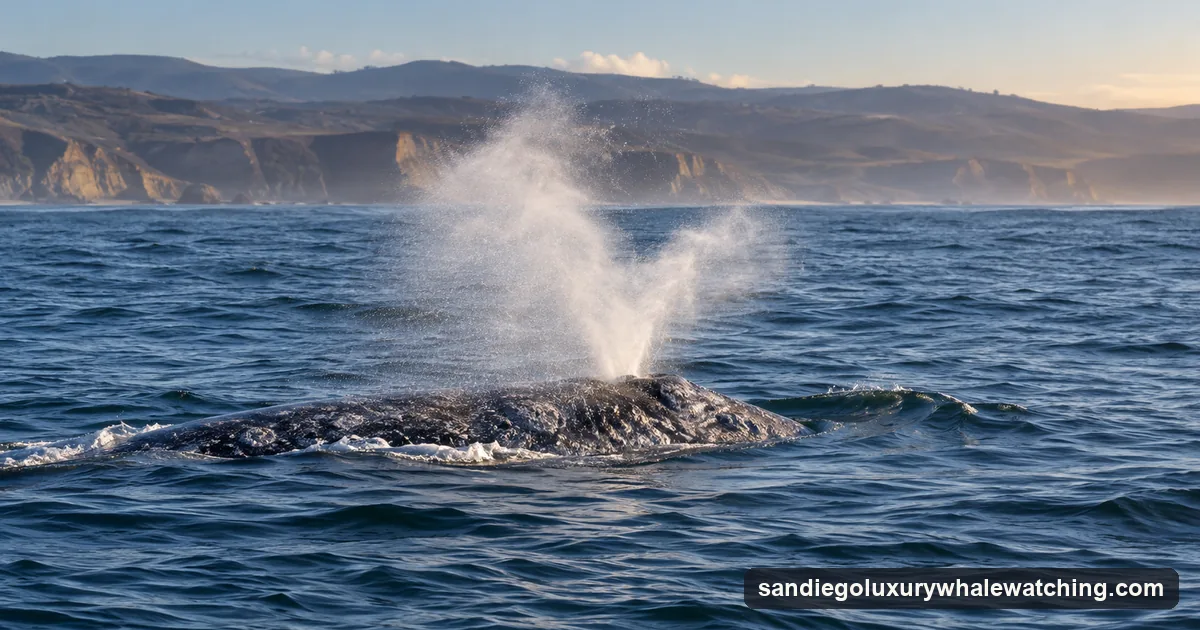
The season at a glance
| Months | Whales most often seen | What to know |
|---|---|---|
| Mid-December to February | Gray whales, heading south | Peak in mid-January; early in the season they pass closer to shore |
| Late February to April | Gray whales heading north, the last mothers and calves | Farther offshore; humpbacks return in March and April |
| May | Fin, humpback and minke whales; the first blue whales in some years | The changeover month |
| June to September | Blue whales, plus fin, humpback and minke whales | The blue whale months |
| October and November | Humpbacks from mid-October, fin whales into October | Between the two big seasons; dolphins carry many trips |
| All year | Common and bottlenose dolphins, sea lions, orcas now and then | Why the boats sail every month |
Sources agree on the gray whales and disagree a little on the blue whales. San Diego Whale Watch and City Cruises put blue whale season at June to September; Next Level Sailing, which runs the yacht America, counts May through September. Whales do not read calendars, so treat the edges of each window as a maybe.
December and January: gray whale season
Gray whales spend the summer feeding in the northern Bering and Chukchi seas, then swim south in fall to winter lagoons off Baja California, Mexico, a round trip of about 10,000 miles. Most pass San Diego in late December, January and February, and the National Park Service at Cabrillo calls mid-January the peak. Calves are born on the way or in the Mexican lagoons from early January to mid-February.
December. The first grays show up from mid-December, so a trip early in the month leans on dolphins and whatever humpbacks or fin whales are around. Late December is a safer bet. Flagship Cruises and Events notes that southbound whales swim closer to the coast early in the season, about 3 to 5 miles out.
January. This is the month to book if gray whales are the point. The whales are steady swimmers, moving at about five miles an hour, and most travel between the kelp beds, about three-quarters of a mile out, and the horizon. Cabrillo National Monument also holds its Whale Watch Weekend in January, free with park entry.
The population has had a rough decade. NOAA’s estimate published in July 2026, from the latest southbound count, put eastern North Pacific gray whales at about 17,750, up from about 12,890 the year before, which was one of the lowest figures since counting began in the late 1960s.
Watching gray whales from shore
You do not need a boat in winter. The heights around Cabrillo’s Kelp Forest Overlook and the old Point Loma lighthouse are the park’s best viewpoints, and an overlook near the lighthouse has a glassed-in observatory with telescopes. Bring binoculars and watch for the blows: up to 15 feet high, three to five in a row, 30 to 50 seconds apart. The park is open daily from 9 a.m. to 5 p.m., closed on Thanksgiving and Christmas, and entry is $20 per private vehicle or $10 per person on foot or by bike, valid for seven days. Farther north, Torrey Pines State Natural Reserve lists migrating gray whales in winter among the animals to watch for from its trails; day-use parking there is $15 to $25 per vehicle.
From shore you see spouts and backs at a distance, and only on the southbound leg: the northbound whales in spring are generally too far out to see from Cabrillo, even with binoculars. That is the case for the boat.
Late February to April: northbound grays and humpbacks
Some grays turn north in late February, and northbound whales can be seen along the West Coast from mid-February to May. Mothers with calves are the last to leave the lagoons, staying until March or April. Northbound whales travel farther out, which Flagship puts at up to 9 to 12 miles off the coast, so this is boat season rather than cliff season. Humpbacks are back in March and April, and the America’s season notes add fin whales from April.
Summer: blue whale watching in San Diego
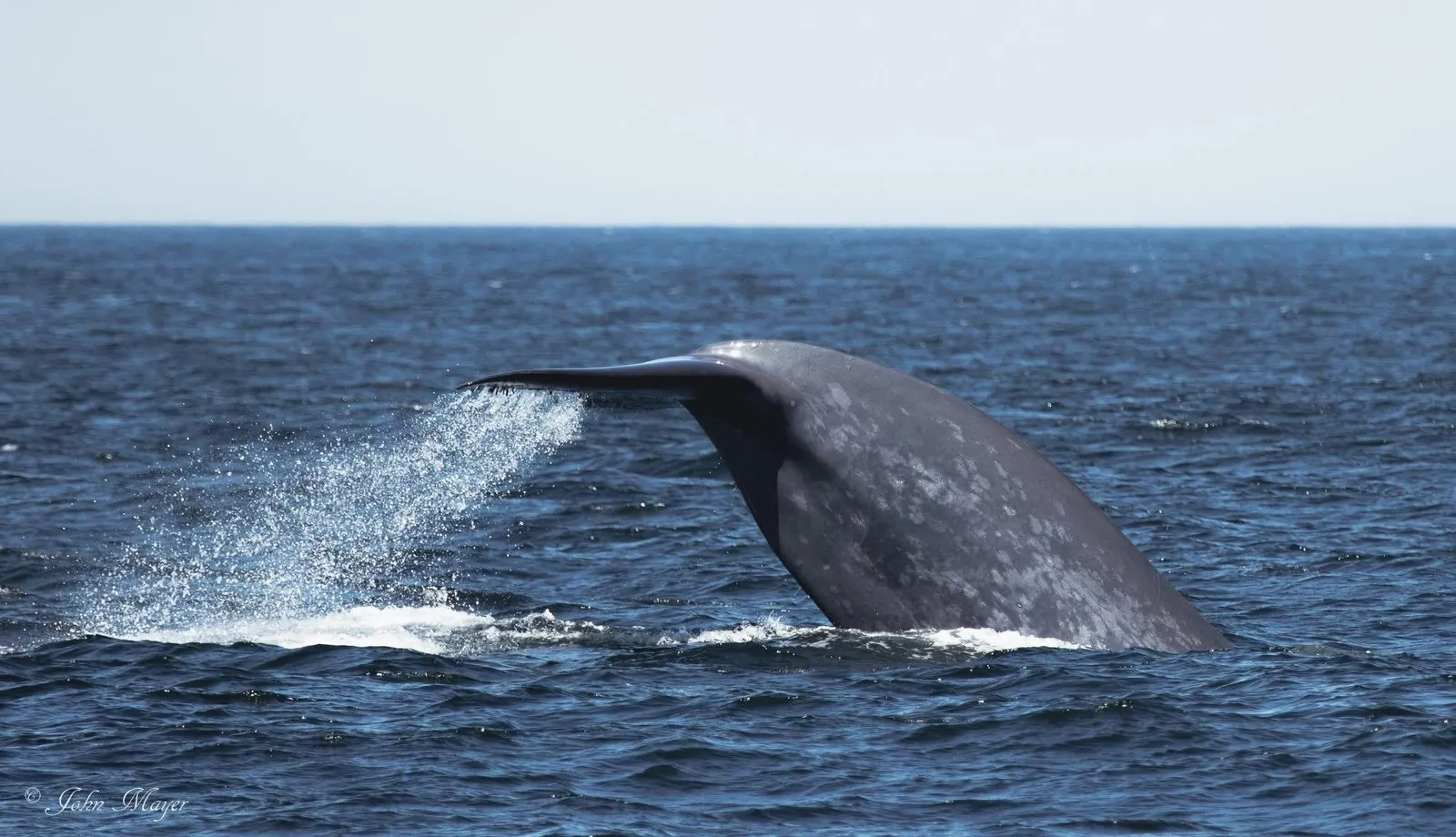
Most blue whales in the Northeast Pacific spend summer and fall feeding on krill off the U.S. West Coast, and boats off San Diego see them mostly from June through September. Fin, humpback and minke whales are around too; Legacy Whale Watch rates May to October as a good chance for all three. A June 2026 guest on the America reported three blue whales on one trip. A fast boat covers more water in search of them: the Peregrine cruises at up to 25 knots and is licensed for offshore as well as coastal trips.
Summer is also when the boats are busiest. San Diego Whale Watch warns that Mission Bay gets very busy on summer weekends and holidays, so allow extra time for traffic and parking.
October and November: are whales out in San Diego right now?
Yes, though fewer of the big ones. San Diego Whale Watch names mid-October through November as humpback time, and the America’s season notes describe a southbound humpback migration in fall. Guests in October 2026 reported two humpbacks on the Peregrine and humpbacks plus large dolphin pods on Legacy’s boat. The gray whales are still on their way south from the Arctic and reach San Diego from mid-December.
Morning or afternoon?
Whales come up to breathe all day, so the time of day does not change which whales are out there. The sea does change. Wild Pacific Whale Watch says morning departures generally offer the calmest conditions, Sea Monkey Adventures says San Diego mornings bring little wind and few waves, and Fun Cat Sailing Adventures says the best sailing winds come at mid-day and in the afternoon. If you are prone to seasickness, take the morning trip and take the medicine 30 minutes before departure.
Which trip, by season
The Peregrine sails in every month, which makes it the simplest choice whatever your dates; its tour page has the details. On a budget, Legacy’s three-hour cruise runs year-round from Mission Bay. San Diego whale watching tours compared sets all seven boats side by side, is San Diego whale watching worth it? covers the odds and the guarantees, and for gray whales farther north, see the best places for whale watching in California.
Book the Peregrine, in Any Month
Wild Pacific Whale Watch runs the 82-foot Peregrine year-round from H&M Landing in Point Loma: 3 to 3.5 hours with an air-conditioned cabin, zero-speed stabilizers and marine-biologist narration, and a sighting guarantee: the listing promises your next trip free if you see no whales. Rated 4.6 from 86 reviews, from $75 as of October 2026.
Check Availability & Book